digital marketing
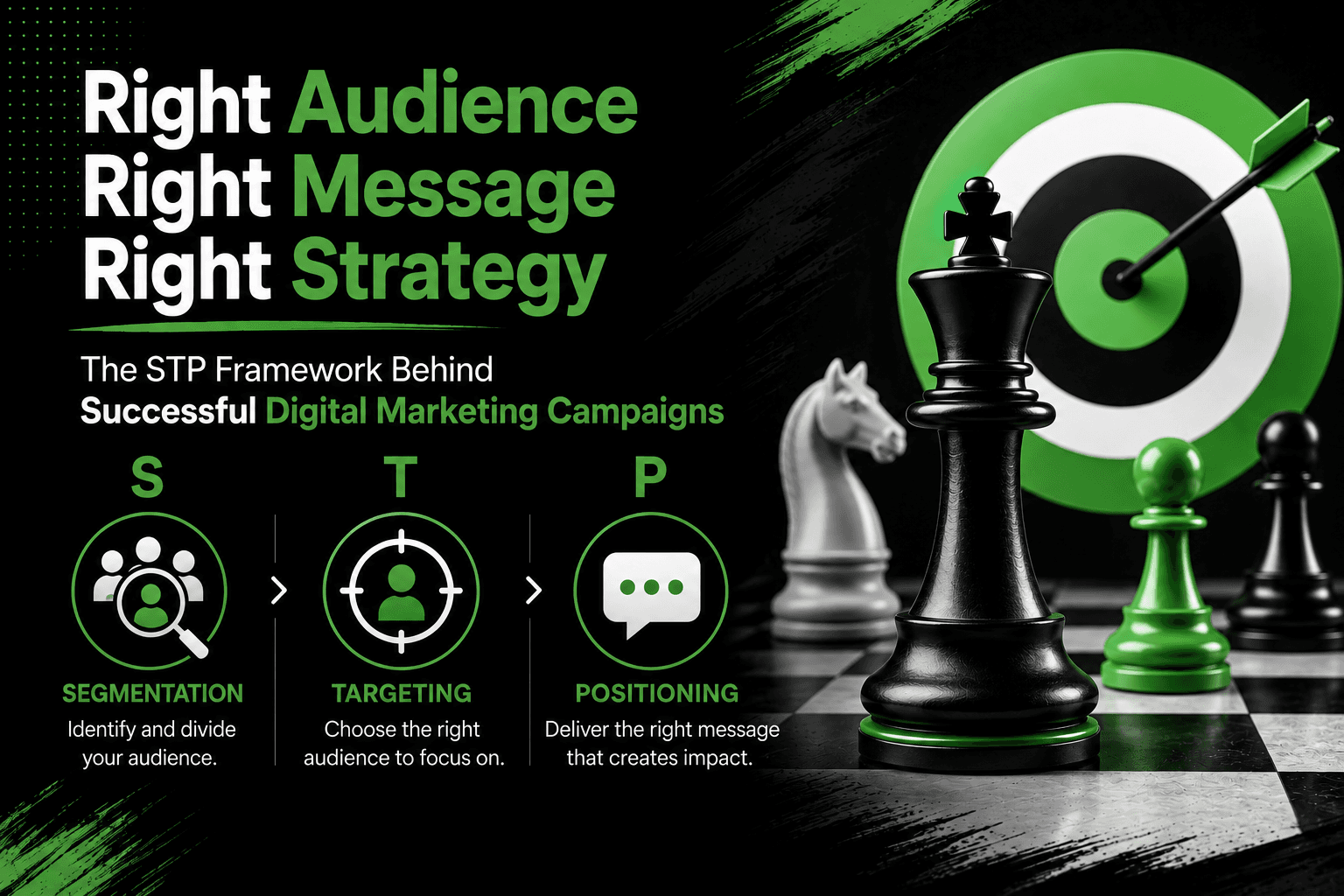
Right Audience. Right Message. Right Strategy: The STP Framework Behind Successful Digital Marketing Campaigns
August 28, 2026 · By Aysha Rizwana
Introduction
Picture this. A company spends thousands of rupees on Facebook Ads, hires a designer to create eye-catching creatives, and watches the impressions roll in --- 50,000, 100,000, more. The ad looks great. The reach is huge. And yet, at the end of the month, there are barely a handful of conversions.
Sound familiar?
This is one of the most common frustrations in digital marketing, and it usually comes down to one root cause: trying to talk to everyone instead of talking to the right someone.
When a campaign is built for "everyone," it ends up connecting with no one. A 22-year-old college student, a 45-year-old business owner, and a 60-year-old retiree don't respond to the same message, the same tone, or the same offer. Yet many beginner marketers still design one generic ad and hope it works for all of them.
This is exactly the gap the STP Framework in digital marketing fills. STP --- Segmentation, Targeting, and Positioning --- is a strategic model that helps marketers stop guessing and start understanding: who the real customer is, which group is worth pursuing, and how to position a brand so it sticks in that customer's mind.
In this blog, you'll learn what STP is, why it forms the backbone of every high-performing Meta Ads, Google Ads, SEO, and social media campaign, and how a well planned STP marketing strategy turns real, practical examples into campaigns that convert.
What is the STP Framework?
STP stands for Segmentation, Targeting, and Positioning. It's a three-step marketing model that has guided brand strategy since the 1950s--60s, when marketers first realized that mass marketing --- one message for the entire population --- was losing effectiveness as markets grew more diverse. Today, in the age of Meta Ads Manager, Google Ads audience layers, and AI-driven personalization, an effective STP marketing strategy matters more than ever.
Here's the simple breakdown:
Segmentation — Dividing a broad market into smaller, meaningful groups of people who share similar needs, behaviors, or characteristics.
Targeting — Evaluating those groups and choosing the one (or few) that are most valuable and realistic for your business to serve.
Positioning — Deciding how you want your brand to be perceived in the minds of that chosen audience --- what makes you different, relevant, and memorable.
A simple everyday example: Think of a movie theatre. It doesn't sell every film to every person. Instead, it segments its audience --- families, teenagers, couples, film buffs --- then targets a specific show timing and screen for each group, and positions each film differently through its trailer and messaging. A family film trailer emphasizes fun and togetherness; a horror film trailer emphasizes thrill and suspense. Same theatre, same product category, completely different STP execution.
Why STP is the Foundation of Digital Marketing Campaigns
Every digital marketing channel you'll ever use is, at its core, built on the logic of STP marketing strategy.
Meta Ads
Meta's ad platform is practically designed around segmentation and targeting. You choose audiences based on interests, behaviors, demographics, custom audiences (people who already engaged with your brand), and lookalike audiences (new people who resemble your best customers). None of this works if you haven't first done the thinking work of STP --- Meta's tools only execute the strategy you bring to them.
Google Ads
Google Ads runs on intent-based targeting. When someone searches "best digital marketing course in Kerala," they've told you exactly what they need. Positioning your ad copy to match that specific search intent --- rather than a generic message --- is STP in action, applied to keywords instead of interests.
Social Media Marketing
Content that performs well on social media is content built around what a specific audience segment actually cares about. A page trying to please everyone ends up with content that engages no one. Segmenting your followers mentally --- even if it's just "beginners vs. professionals" --- sharpens every post you create.
SEO
Modern SEO isn't just about ranking for keywords; it's about matching search intent. Positioning your content to directly answer what a segmented audience is searching for (informational, transactional, navigational) is what separates content that ranks and converts from content that just exists.
Segmentation: Understanding Who Your Customers Are
Segmentation is the foundation step of any STP marketing strategy --- you can't target or position anything until you know the different types of people in your market. There are four major types of segmentation every digital marketer should know.
Demographic Segmentation
This groups people based on measurable traits: age, gender, income, education, and occupation.
Digital marketing example: A career-focused digital marketing academy segments its market by education level and career stage --- targeting recent graduates who are job-hunting differently than mid-career professionals looking to upskill.
Geographic Segmentation
This groups customers by location --- country, state, city, or even neighborhood.
Example: A digital marketing institute running ads specifically for students based in Kerala will use location-based targeting and even mention "Kerala" in ad copy and landing pages, making the message feel local and relevant.
Psychographic Segmentation
This looks beyond demographics into lifestyle, interests, values, and motivations --- the "why" behind a purchase decision.
Example: Fitness brands don't just target "people aged 20-35." They target health-conscious individuals who value discipline, self-improvement, and an active lifestyle --- regardless of age or income bracket.
Behavioral Segmentation
This groups people by their actions: buying behavior, website activity, engagement level, and purchase history.
Example: E-commerce remarketing ads --- the ones that follow you around the internet after you've added a product to your cart but didn't buy.
| Segmentation Type | Based On | Digital Marketing Example |
|---|---|---|
| Demographic | Age, gender, income, education | Career academy targeting graduates |
| Geographic | Location | Institute targeting students in Kerala |
| Psychographic | Lifestyle, values, motivation | Fitness brand targeting health-conscious users |
Targeting: Finding Your Ideal Customers
Once you've segmented the market, the next question every STP marketing strategy must answer is: which of these segments should you actually pursue? That's targeting.
There are three common targeting strategies:
Mass Targeting — Appealing to the entire market with one broad message. Very few brands can pull this off successfully.
Example: Coca-Cola markets to almost everyone, everywhere, with universal themes like happiness and refreshment.
Differentiated Targeting — Creating different marketing approaches for different segments within the same overall market.
Example: Fashion brands often run separate campaigns and product lines for men, women, and children --- each with distinct messaging and creative direction.
Niche Targeting — Focusing narrowly on one specific, well-defined segment.
Example: A digital marketing academy that focuses specifically on fresh graduates looking for their first job --- rather than trying to appeal to students, professionals, and business owners all at once --- is practicing niche targeting.
In practice, digital marketers select and refine these audiences using tools like Meta Ads Manager (interest and behavior layers, custom/lookalike audiences), Google Ads (keyword and audience targeting, in-market segments), and Google Analytics (behavioral and demographic reports that reveal who's actually converting).
Positioning: Creating the Right Brand Message
Segmentation tells you who's out there. Targeting tells you who to pursue. Positioning tells you how to speak to them so your brand actually sticks --- and it is the final piece that turns segmentation and targeting into a complete STP marketing strategy.
In simple terms: positioning is how customers remember your brand compared to your competitors.
A strong positioning statement should clearly communicate three things:
- Who you help --- your specific audience
- What problem you solve --- the value you deliver
- Why customers should choose you --- your differentiator
Some classic examples of powerful positioning:
Apple --- Positioned around premium innovation and simplicity, not just "phones and computers."
Nike --- Positioned around inspiration and performance, encapsulated in "Just Do It," not just "sportswear."
Zomato --- Positioned around convenient, easy food discovery and delivery, not just "a food app."
None of these brands try to be everything to everyone. Their positioning is sharp, specific, and consistent across every touchpoint --- website, ads, social media, and packaging.
Real-Life STP Example: Cafe
Let's see a practical STP marketing strategy in action using a business almost everyone can relate to --- a local cafe trying to grow its footfall and online orders through digital marketing.
Business: An independent neighbourhood cafe
Segmentation --- Possible audience groups in the market:
- College students looking for an affordable hangout spot
- Remote-working professionals needing a quiet place with good WiFi
- Families wanting a casual weekend breakfast spot
- Office-goers nearby who want quick coffee and takeaway
Targeting --- Primary audience chosen: Remote-working professionals aged 24--35 within a 3 km radius who need a comfortable, reliable workspace outside home.
Positioning --- The message built for that audience: "Your new work-from-cafe spot --- great coffee, fast WiFi, and a table that's actually yours for the afternoon."
Notice how specific this is. It's not "great coffee, great vibes" --- it's built around the exact reason a remote professional chooses one cafe over another: a dependable place to actually get work done.
How STP Creates Better Marketing Campaigns
The real power of a STP marketing strategy shows up when you compare a campaign built without it to one built with it.
Without STP:
"Join our digital marketing course."
With STP:
"For fresh graduates: Build a career in digital marketing with practical projects and certification."
The second message is longer, but it does something the first can't --- it makes the exact right person stop scrolling. It speaks their language, addresses their specific goal (a career, not just a skill), and gives them a reason to believe (practical projects, certification).
Personalized, segment-specific messaging consistently outperforms generic messaging because people respond to relevance. A message that feels like it was written specifically for them earns attention; a message written for "everyone" gets scrolled past.
Common STP Mistakes Marketers Make
Even experienced marketers fall into these traps when building an STP marketing strategy:
- Targeting everyone --- trying to appeal to the whole market instead of a defined segment
- Not researching customers --- building campaigns on assumptions instead of data
- Ignoring customer pain points --- focusing on product features instead of the problem being solved
- Creating generic messages --- using the same ad copy across completely different audience segments
- Poor brand positioning --- failing to clearly explain why the brand is different from competitors
Avoiding these mistakes is often the difference between a campaign that burns budget and one that converts.
STP vs Buyer Persona
Students and professionals often confuse STP with buyer personas. They're related but not the same thing --- and understanding the difference will make you a sharper marketer.
| Aspect | STP Framework | Buyer Persona |
|---|---|---|
| Meaning | A strategic model to segment, target, and position a market | A semi-fictional profile representing an ideal customer |
| Purpose | Decide which market segment to pursue and how to position the brand | Humanize and visualize the target customer for content and messaging |
| Usage | Used at the strategic/planning stage of a campaign | Used at the content creation and messaging stage |
In practice, the two work together beautifully: STP defines the strategic direction, and buyer personas bring that strategy to life with specific, relatable details that guide tone, creative, and copy.
Frequently Asked Questions (FAQs)
1. What is STP framework in digital marketing?
STP stands for Segmentation, Targeting, and Positioning. It's a strategic marketing model that helps businesses identify distinct customer groups, choose which group to focus on, and craft a brand message that resonates specifically with that group.
2. Why is STP important for marketers?
STP prevents wasted ad spend and generic messaging by ensuring campaigns are built around a clearly defined audience, which leads to higher engagement, better conversion rates, and stronger brand recall.
3. What are the three stages of STP?
The three stages are Segmentation (dividing the market into groups), Targeting (selecting the most valuable group), and Positioning (defining how the brand should be perceived by that group).
4. How does STP improve advertising campaigns?
STP ensures ad creatives, copy, and targeting settings on platforms like Meta Ads and Google Ads are built for a specific audience segment, which increases relevance, click-through rates, and return on ad spend.
5. What is market segmentation?
Market segmentation is the process of dividing a broad target market into smaller groups of consumers who share similar characteristics, such as demographics, location, lifestyle, or behavior.
6. What is target audience in marketing?
A target audience is the specific group of people a business chooses to focus its marketing efforts on, selected because they are the most likely to need, want, and buy the product or service.
7. What is brand positioning?
Brand positioning is the strategy of shaping how a brand is perceived in the minds of its target audience relative to competitors, usually built around a clear value proposition and differentiator.
8. How is STP used in Meta Ads?
In Meta Ads, segmentation and targeting are applied through audience selection tools like interests, behaviors, custom audiences, and lookalike audiences, while positioning is reflected in the ad creative and copy shown to that chosen audience.
Conclusion
Successful marketing was never about reaching everyone. It's about reaching the right people, with the right message, using the right STP marketing strategy.
That's the entire promise of the STP Framework:
Right Audience + Right Message + Right Strategy = Campaigns That Actually Convert
Whether you're a student preparing for your first digital marketing interview, a freelancer pitching your next client, or a business owner trying to make your ad budget go further, mastering STP will change how you think about every campaign you build from here on.
If you want to go beyond theory and learn how to apply Segmentation, Targeting, and Positioning inside real Meta Ads accounts, Google Ads campaigns, and SEO strategies, that's exactly what we train students to do --- with hands-on, industry-focused digital marketing courses built for real careers.
Author
Aysha Rizwana — Digital Marketing Executive Cum Trainer
LinkedIn: www.linkedin.com/in/aysha-rizwana-c-h

Author
Aysha Rizwana
Digital Marketing Executive cum Trainer
* Join Techoriz
Ready to master digital marketing?
Learn with Kerala's first ISO-certified agency-based digital marketing academy. Get expert training, live projects, and 95% placement support.
Keep reading
Related Posts
 digital marketing
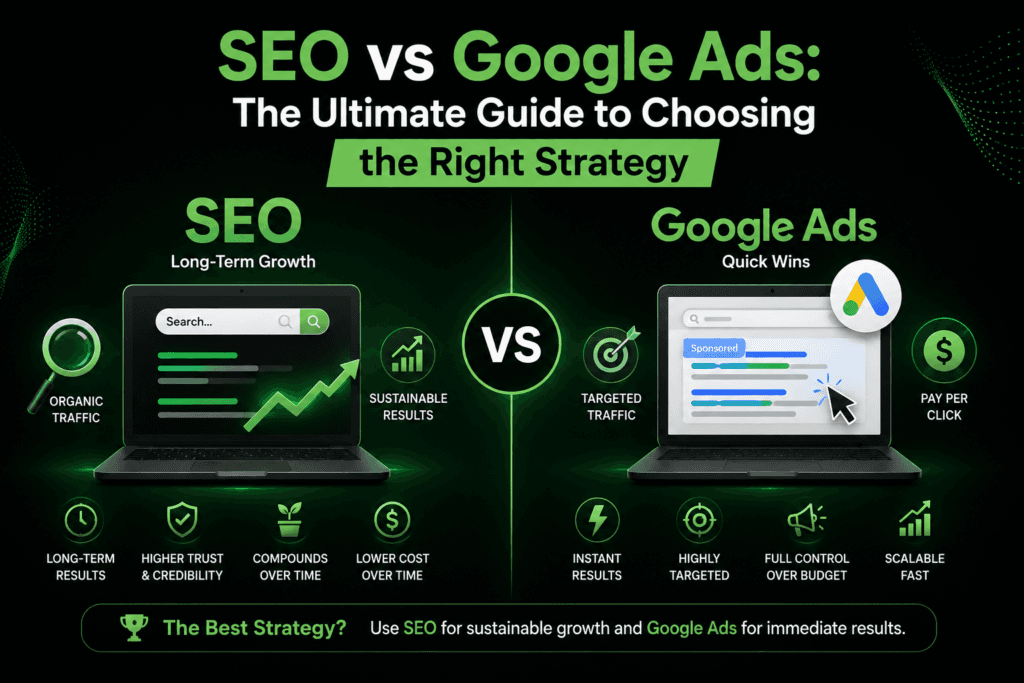
SEO vs Google Ads: The Ultimate Guide to Choosing the Right Strategy
SEO or Google Ads? This guide breaks down the debate in plain terms with real numbers — which strategy fits your goals, your budget, and your timeline.
July 31, 2026 · Aysha Rizwana
Read digital marketing
Experience Excellence: Explore the Amenities at Techoriz Digital Academy, HiLITE Business Park, Calicut
Experience Excellence: Explore the Amenities at Techoriz Digital Academy, HiLITE Business Park, […]
March 12, 2025 · Techoriz Digital Academy
Read digital marketing
Success Stories of Techoriz Digital Academy Students
Success Stories of Techoriz Digital Academy Students At Techoriz Digital Academy, we […]
March 12, 2025 · Techoriz Digital Academy
Read