
general
SEO Mistakes That Kill Website Rankings in 2026
June 1, 2026 · By Ajmal Rishan
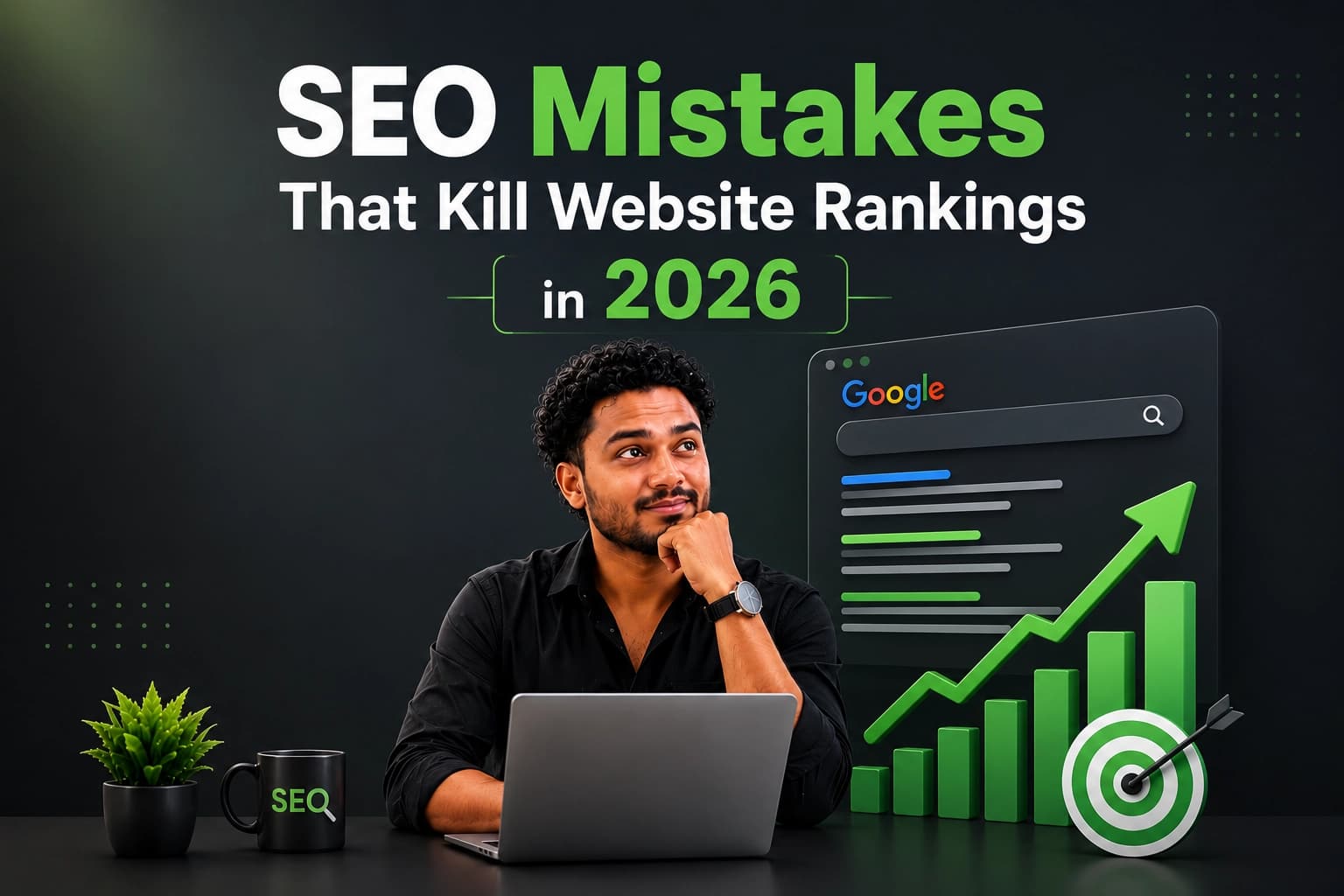
In 2026, many businesses are investing heavily in SEO but still struggling to rank on Google. One of the most common questions website owners ask is:
“Why is my website not ranking even after doing SEO?”
The answer is simple. Many websites unknowingly make critical SEO mistakes that negatively affect their search visibility. Search engines like Google have become smarter and more focused on user experience, search intent, content quality, and technical performance.
Old SEO techniques that worked years ago are no longer effective. In fact, some outdated practices can even reduce rankings. As an SEO professional, I have seen many websites lose traffic because of avoidable SEO audit mistakes.
In this blog, let’s discuss the biggest SEO mistakes in 2026 and understand how to fix them properly to improve website rankings and organic traffic.
Ignoring Search Intent
One of the biggest reasons why websites are not ranking is poor understanding of search intent.
Many websites still focus only on inserting keywords into content without understanding what users are actually searching for. But in 2026, Google analyzes the purpose behind every search query.
For example, if a user searches: “Best SEO course for beginners”
The user expects:
- Beginner-friendly explanations
- Course information
- Practical training details
- Career opportunities
If the webpage only contains generic information about SEO, users quickly leave the website. This increases bounce rate and reduces ranking potential.
How to Avoid This SEO Mistake
Before creating content:
- Understand user intent
- Analyze competitor content
- Identify what users expect
- Create content that directly answers their questions
Modern SEO is more about solving problems than simply targeting keywords.
Publishing Low-Quality AI Content
AI writing tools are becoming very popular, but publishing fully AI-generated content without human editing is a major SEO audit mistake in 2026. Google is improving its ability to detect:
- Thin content
- Generic articles
- Repetitive information
- Unhelpful AI-generated pages
Many websites publish bulk AI content just for rankings, but this often damages trust and user engagement.
What Google Prefers Now
Search engines prefer content that includes:
- Real experience
- Human insights
- Original opinions
- Practical examples
- Helpful explanations
AI tools can help with content creation, but human expertise and personalization are essential for long-term SEO success.
Poor Technical SEO
Technical SEO problems can silently kill website rankings. Even if your content is excellent, Google may struggle to crawl or index your website if technical issues exist.
Common Technical SEO Mistakes
- Broken links
- Slow-loading pages
- Duplicate content
- Crawl errors
- Missing schema markup
- Incorrect redirects
- Indexing problems
These issues reduce search engine visibility and create poor user experience.
Why Technical SEO Matters
Technical SEO helps search engines:
- Understand website structure
- Crawl pages properly
- Index important content
- Improve website performance
Without proper technical optimization, ranking becomes difficult.
Slow Website Speed
Website speed is now a major ranking factor. Users expect websites to load quickly. If a page takes too much time to open, visitors leave immediately. This affects:
- User experience
- Bounce rate
- Conversions
- SEO rankings
Common Reasons for Slow Websites
- Heavy images
- Poor hosting
- Too many plugins
- Unoptimized code
- Large JavaScript files
- No caching system
Google now focuses heavily on Core Web Vitals metrics.
Important Speed Metrics
- Largest Contentful Paint (LCP)
- First Contentful Paint (FCP)
- Interaction to Next Paint (INP)
Improving website speed is essential for better SEO performance in 2026
Keyword Stuffing
Keyword stuffing is one of the oldest SEO mistakes that still exists today. Earlier, repeating keywords many times helped websites rank. But modern search engines understand content context and semantic meaning.
Overusing focus keywords like:
- SEO mistakes
- why website not ranking
- SEO audit mistakes
can make content look unnatural and spammy.
Better SEO Strategy
Instead of keyword stuffing:
- Use natural writing
- Add semantic keywords
- Include related terms
- Focus on readability
SEO content should feel human and conversational.
Weak Content Structure
Many websites publish content without proper formatting and structure.
Large blocks of text reduce readability and user engagement. Visitors prefer content that is easy to scan and understand.
Common Content Structure Mistakes
- No headings
- Long paragraphs
- Lack of spacing
- No bullet points
- Poor readability
How to Improve Content Structure
Use:
- Clear headings
- Short paragraphs
- Bullet points
- Internal links
- FAQ sections
Well-structured content improves both user experience and SEO performance.
Ignoring Mobile Optimization
Most internet users now browse websites on mobile devices.
Google uses mobile-first indexing, which means the mobile version of your website is extremely important for rankings.
Common Mobile SEO Mistakes
- Non-responsive design
- Small text size
- Poor mobile speed
- Layout issues
- Difficult navigation
If a website does not perform well on mobile devices, ranking becomes difficult.
Best Practice
Always test:
- Mobile responsiveness
- Loading speed
- User experience
- Navigation simplicity
Mobile optimization is no longer optional in SEO.
Not Updating Old Content
Many websites publish blogs and never update them again.
But SEO changes continuously. Old content can lose rankings when information becomes outdated.
Why Content Updates Matter
Updating old content helps:
- Improve freshness
- Add new SEO keywords
- Fix outdated information
- Improve search visibility
- Increase traffic
Refreshing existing content is often more effective than creating completely new articles.
Poor Internal Linking
Internal links help:
- Search engines understand content relationships
- Improve crawlability
- Increase page authority
- Enhance user navigation
Common Internal Linking Mistakes
- No internal links
- Irrelevant linking
- Broken internal links
- Over-linking
Better Internal Linking Strategy
Connect related pages naturally.
For example: A blog about SEO mistakes can link to:
- Technical SEO guides
- Website speed optimization
- SEO audit checklist
- Keyword research tutorials
This strengthens topical authority.
Ignoring EEAT Signals
Google strongly focuses on EEAT in 2026:
- Experience
- Expertise
- Authoritativeness
- Trustworthiness
Websites lacking trust signals may struggle to rank even with good content.
Important EEAT Factors
- Author credibility
- Real-world experience
- Original insights
- Secure website
- Helpful content
- Positive reputation
Search engines now prioritize websites that demonstrate expertise and authenticity.
Not Performing Regular SEO Audits
Many businesses never conduct proper SEO audits.
Without regular audits, websites continue accumulating SEO issues over time.
What an SEO Audit Helps Identify
- Technical errors
- Broken pages
- Duplicate content
- Indexing issues
- Slow speed problems
- On-page SEO issues
Regular SEO audits help maintain website health and improve rankings consistently.
Focusing Only on Rankings Instead of Users
One of the biggest SEO mistakes is creating content only for search engines.
Modern SEO is user-focused. Google now analyzes:
- User engagement
- Content usefulness
- Navigation experience
- Website performance
- Time spent on page
Websites designed only for rankings often fail to build long-term authority.
What Works Best in 2026
Focus on:
- Helpful content
- Better user experience
- Real value
- Problem-solving content
- Human-centered writing
SEO success now depends on user satisfaction.
Frequently Asked Questions
Why is my website not ranking on Google?
Your website may not rank because of poor technical SEO, low-quality content, slow speed, weak search intent optimization, or outdated SEO practices.
What are the biggest SEO mistakes in 2026?
Some major SEO mistakes include:
- Keyword stuffing
- Ignoring search intent
- Poor mobile optimization
- Slow website speed
- Publishing low-quality AI content
- Missing technical SEO
How important is technical SEO in 2026?
Technical SEO is extremely important because it helps search engines crawl, index, and understand your website properly.
Can AI-generated content affect rankings?
Yes. Low-quality AI-generated content without human editing may negatively impact rankings and user trust.
How often should I perform an SEO audit?
It is recommended to perform a complete SEO audit every 3 to 6 months to identify and fix website issues.

Author
Ajmal Rishan
SEO Expert cum Trainer
* Join Techoriz
Ready to master digital marketing?
Learn with Kerala's first ISO-certified agency-based digital marketing academy. Get expert training, live projects, and 95% placement support.
Keep reading
Related Posts
 general
Why Choose a NSDC-Recognised Digital Marketing Course in Kerala?
Why Choose a NSDC-Recognised Digital Marketing Course in Kerala? If you’ve spent […]
August 1, 2026 · Ajmal Rishan
Read general
ChatGPT vs Google Search: What Marketers Need to Know
For more than two decades, search engines have shaped the way people […]
July 31, 2026 · Shahala Sherin
Read general
Match Types in 2026: How “Broad Match + Smart Bidding” Has Changed Keyword Strategy
Match Types in 2026: How “Broad Match + Smart Bidding” Has Changed […]
July 29, 2026 · Megha
Read