
general
ChatGPT vs Google Search: What Marketers Need to Know
July 31, 2026 · By Shahala Sherin
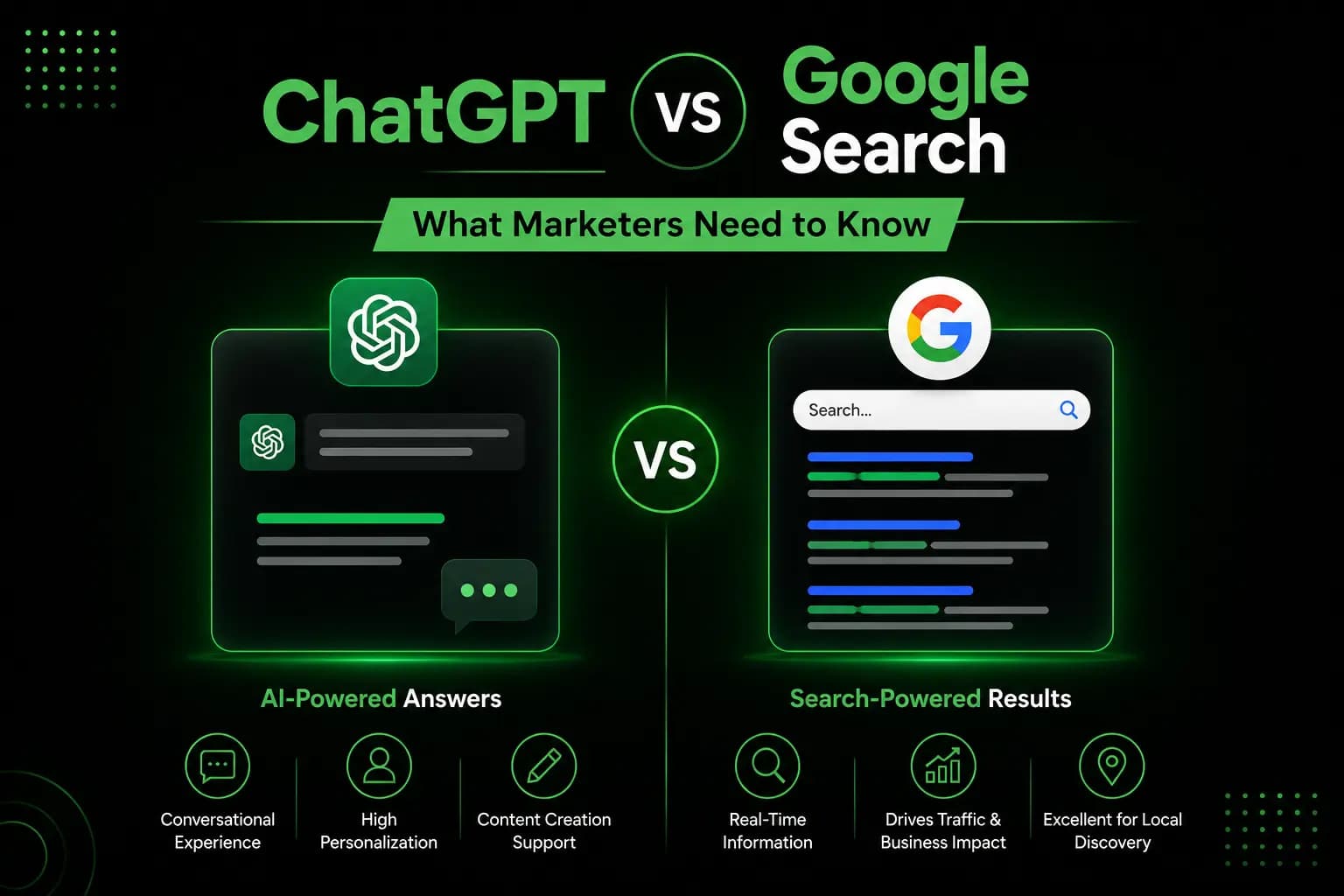
For more than two decades, search engines have shaped the way people discover information online. Whether it was finding a nearby restaurant, researching a product, or learning a new skill, most internet journeys started with a search engine.
Today, that behavior is beginning to change.
AI-powered assistants such as ChatGPT are transforming how users search, learn, and make decisions. Instead of browsing through multiple websites and comparing sources, users can simply ask a question and receive a direct answer within seconds.
At the same time, platforms like Google Search continue to dominate online discovery and remain one of the most powerful traffic sources for businesses worldwide.
For digital marketers, this raises an important question:
Is AI replacing search engines, or are we entering a new era where both coexist?
Understanding the differences between ChatGPT and Google Search is becoming an essential skill for marketers, business owners, and students entering the digital marketing industry.
Understanding Google Search
Google Search works by crawling, indexing, and ranking billions of web pages from across the internet. When a user enters a query, Google’s algorithms analyze hundreds of ranking factors to determine which pages are most relevant to the user’s intent.
For example, if someone searches for:
- Best digital marketing course in Kannur
- SEO strategies for local businesses
- How to run Google Ads campaigns
- Best laptops for digital marketers
Google presents a list of websites, videos, maps, reviews, and advertisements that users can explore further.
In simple terms, Google helps users discover information sources rather than directly providing all the answers.
Strengths of Google Search
1. Access to Multiple Sources
One of Google’s biggest advantages is variety. Users can compare information from blogs, news websites, forums, YouTube videos, and company websites before making decisions.
This is especially valuable for major purchases or business decisions where multiple perspectives matter.
2. Real-Time Information
Google excels at providing fresh information.
Breaking news, stock prices, sports results, government announcements, and trending topics are usually available within minutes of publication.
3. Local Search Capabilities
When users search for terms such as:
- Digital marketing institute near me
- SEO agency in Kannur
- Restaurants in Calicut
Google can provide maps, reviews, business profiles, contact information, and directions.
This makes local SEO one of the most important digital marketing strategies for businesses.
4. Website Traffic Generation
For businesses, Google remains a major source of organic traffic.
Companies invest heavily in SEO because ranking on the first page of search results can generate leads and sales for years.
Limitations of Google Search
Despite its strengths, Google Search has some challenges.
Users often need to visit multiple websites to find complete answers. Sometimes they encounter conflicting information, clickbait headlines, or content designed primarily for rankings rather than user value.
The process of researching a topic can be time-consuming, especially for beginners who don’t know which sources are trustworthy.
Understanding ChatGPT
ChatGPT takes a very different approach.
Instead of displaying links to websites, it generates direct answers in a conversational format.
Users can ask detailed questions such as:
- Create a 30-day SEO plan for a local business.
- Explain Google Ads to a beginner.
- Suggest content ideas for an Instagram campaign.
- Write ad copy for a digital marketing course.
The AI analyzes the request and provides a personalized response instantly.
Rather than helping users discover information sources, ChatGPT focuses on delivering information in a usable format.
Strengths of ChatGPT
1. Instant Answers
One of the biggest advantages of AI assistants is speed.
Instead of opening ten browser tabs and reading several articles, users can receive a summary or action plan in seconds.
2. Conversational Learning
Traditional search requires users to refine their queries repeatedly.
With ChatGPT, users can ask follow-up questions naturally.
For example:
“What is SEO?”
“Can you explain it with an example?”
“How can I learn SEO in three months?”
This conversational experience feels more like interacting with a mentor than using a search engine.
3. Personalized Responses
Google provides the same search results to thousands of users searching for similar terms.
ChatGPT can tailor responses based on individual needs, experience levels, and goals.
A beginner and an experienced marketer asking the same question may receive very different answers.
4. Productivity and Content Creation
Marketers increasingly use AI tools for:
- Blog writing
- Content ideation
- Social media captions
- Email marketing
- Keyword research assistance
- Campaign planning
- Customer communication
AI has become a powerful productivity partner rather than simply a search tool.
Limitations ofChatGPT
AI assistants also have limitations.
Responses may occasionally contain inaccuracies or outdated information if recent web data is unavailable.
For critical decisions involving law, medicine, finance, or business strategy, information should always be verified using authoritative sources.
Unlike Google, AI cannot replace the need for official documentation, industry reports, or primary research.
What Does This Mean for Digital Marketers?
The rise of AI does not mean SEO is disappearing.
Instead, marketers are entering an era where optimization must consider both traditional search engines and AI-powered discovery platforms.
1. Quality Content Matters More Than Ever
AI systems rely heavily on existing high-quality content available on the internet.
Businesses that publish useful, original, and authoritative content are more likely to be referenced, recommended, and discovered.
2. Search Intent Is Becoming More Important
Modern SEO is no longer about inserting keywords repeatedly into a webpage.
Understanding what users actually want when they search is now far more important than exact keyword matching.
Successful marketers focus on solving problems rather than targeting keywords alone.
3. Conversational Search Is Growing
People increasingly search using complete questions instead of short phrases.
Examples include:
- Which digital marketing course is best for beginners?
- How much salary can a fresher digital marketer earn?
- Is SEO still a good career option in 2026?
Content that answers these questions clearly and naturally will perform better in both AI and traditional search environments.
4. Authority and Trust Are Essential
Search engines and AI platforms both prefer reliable information sources.
Brands that demonstrate expertise, publish original insights, and maintain credibility will have a stronger competitive advantage.
5. Marketers Need AI Skills
AI tools are becoming part of everyday marketing workflows.
Future digital marketers will need skills in:
- AI-assisted content creation
- Prompt engineering
- AI-powered research
- Automation tools
- Data analysis
- Performance optimization
Learning how to use AI effectively may become as important as learning SEO or paid advertising.
Will ChatGPT Replace Google Search?
The short answer is no.
Google and ChatGPT solve different problems.Google is designed for discovery, navigation, local searches, and finding original information sources.ChatGPT is designed for explanations, productivity, brainstorming, and personalized assistance.In reality, many users already use both tools together.A marketer may use Google to find industry reports and then use ChatGPT to summarize findings or generate campaign ideas.The future is not about one platform replacing another.It is about learning how to use each platform for its strengths.
Final Thoughts
The digital marketing industry has always evolved alongside technology. From websites and social media to smartphones and automation, marketers who adapt early often gain the biggest advantage.
ChatGPT vs Google Search has become one of the most discussed topics in the AI era, as AI-powered assistants represent the next major shift in online behavior. Businesses that understand how people search, learn, and make decisions in this new environment will be better positioned for success.
For aspiring digital marketers, learning both traditional SEO and AI-powered marketing tools is no longer optional—it is becoming a core professional skill. Understanding the differences in ChatGPT vs Google Search helps marketers create better content, improve user experience, and stay ahead of changing search trends.
The question is no longer “ChatGPT vs Google Search?” Instead, marketers should focus on how each platform complements the other to meet different user needs and business goals.
The real question is:
How can marketers use both together to achieve better results?
The future of ChatGPT vs Google Search is not about replacing one with the other—it’s about combining the strengths of both to build smarter digital marketing strategies, reach the right audience, and achieve better business outcomes.
| Feature | ChatGPT | Google Search |
|---|---|---|
| Primary Function | Provides answers | Finds sources |
| User Experience | Conversational | Search-based |
| Personalization | High | Limited |
| Latest Information | Depends on web access | Excellent |
| Local Business Discovery | Limited | Excellent |
| Website Traffic Generation | No | Yes |
| Research Capability | Good | Excellent |
| Content Creation Support | Excellent | Limited |

Author
Shahala Sherin
Digital Marketing Executive cum Trainer
* Join Techoriz
Ready to master digital marketing?
Learn with Kerala's first ISO-certified agency-based digital marketing academy. Get expert training, live projects, and 95% placement support.
Keep reading
Related Posts
 general
Why Choose a NSDC-Recognised Digital Marketing Course in Kerala?
Why Choose a NSDC-Recognised Digital Marketing Course in Kerala? If you’ve spent […]
August 1, 2026 · Ajmal Rishan
Read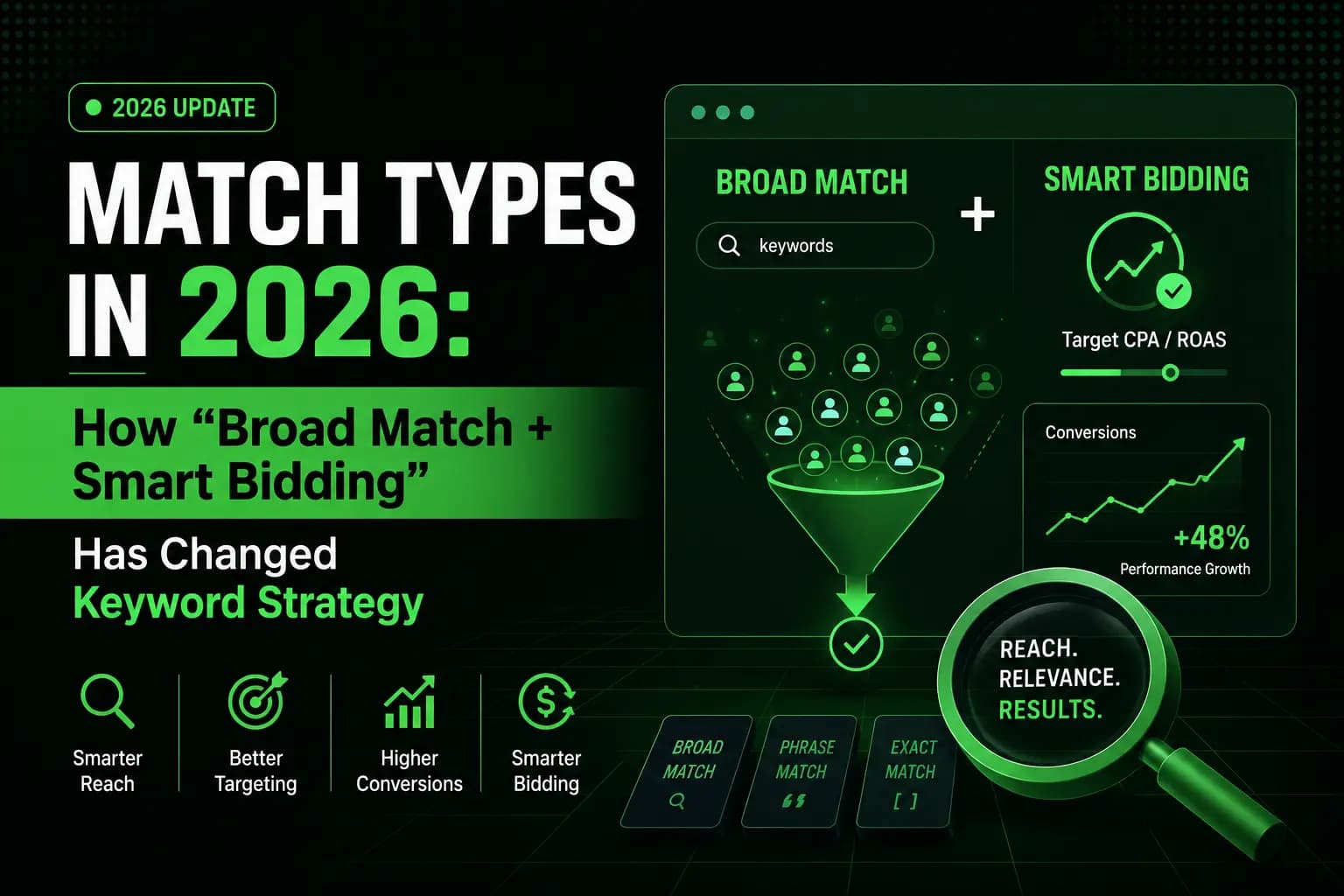 general
Match Types in 2026: How “Broad Match + Smart Bidding” Has Changed Keyword Strategy
Match Types in 2026: How “Broad Match + Smart Bidding” Has Changed […]
July 29, 2026 · Megha
Read general
The Beginner’s Guide to Google Search Console
The Beginner’s Guide to Google Search Console If you have a website […]
July 25, 2026 · Techoriz Digital Academy
Read