In today’s digital-first world, having marketing skills alone is no longer enough. Thousands of professionals know SEO, social media marketing, Google Ads, and content marketing. The real question is:
Why should an employer or client choose you instead of someone else?
The answer often comes down to personal branding.
Whether you’re a student, freelancer, job seeker, or experienced marketer, your online reputation has become one of your biggest career assets. A strong personal brand helps people trust you before they even speak to you.
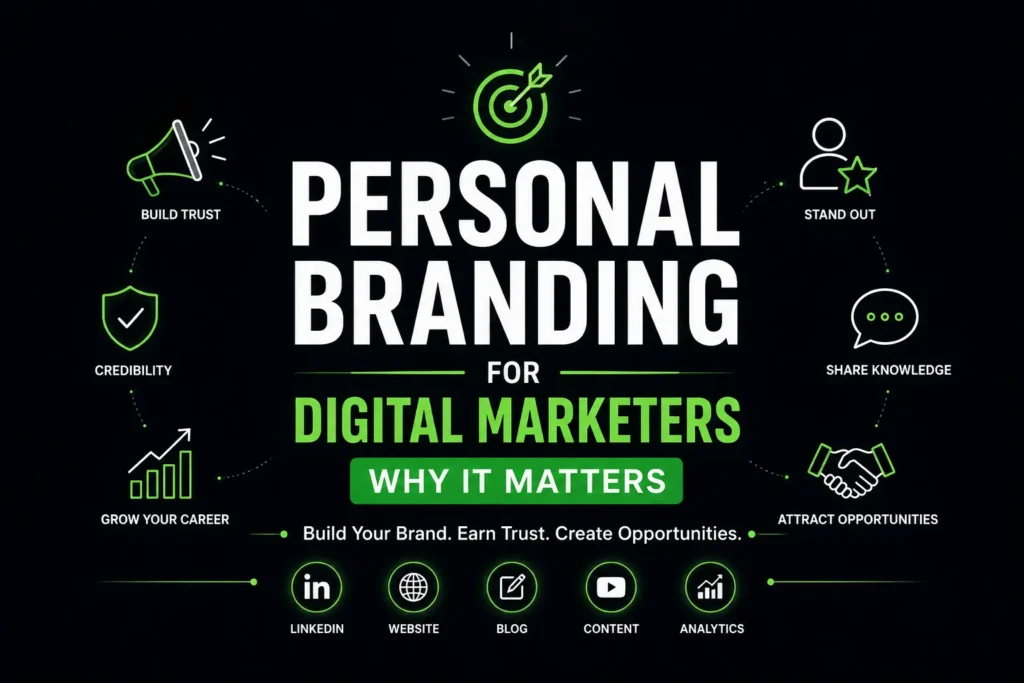
In this guide, you’ll learn why Personal Branding for Digital Marketers has become essential, how it impacts your career, and practical ways to build a brand that stands out.
Personal branding is the process of intentionally shaping how people perceive you professionally. Think of it as your professional identity online.
Your personal brand includes:
Instead of simply saying you’re a digital marketer, your personal brand demonstrates your knowledge through actions, content, and real results.
The digital marketing industry is becoming increasingly competitive every year.
Companies no longer hire solely based on resumes. They search your name on Google, review your LinkedIn profile, check your portfolio, and often explore your social media presence before making a decision.
A strong personal brand helps you:
Simply put, people trust people more than companies.
People naturally feel more confident working with someone who regularly shares valuable insights.
When potential clients or recruiters see your articles, case studies, or marketing tips, they begin to view you as an expert.
Trust often leads to opportunities.
There are countless digital marketers with similar certifications. Your personal brand becomes the factor that differentiates you.
Instead of saying:
“I’m an SEO Specialist.”
You become:
“The marketer who helps local businesses grow organic traffic through practical SEO strategies.”
That positioning is memorable.
Recruiters frequently search LinkedIn and Google for marketing professionals.
If your profile showcases:
You’re more likely to receive interview invitations without actively applying.
Clients prefer hiring marketers they already trust.
When your website, LinkedIn profile, or social media consistently provide helpful content, clients feel they’re hiring an expert—not taking a risk.
Many successful freelancers receive inbound enquiries purely because of their personal brand.
You don’t need 100,000 followers. Even a small audience can establish authority if your content consistently solves real marketing problems.
Share insights like:
Consistency matters more than follower count.
Avoid trying to become known for everything.
Choose an area such as:
A focused niche helps people remember your expertise.
LinkedIn is one of the most valuable platforms for digital marketers.
Make sure your profile includes:
An optimized profile increases your visibility in recruiter searches.
Content is proof of your expertise.
Share:
Teaching others helps establish credibility.
Every digital marketer should have a personal website.
Include:
A website gives you complete control over your online identity.
Instead of saying:
“I know SEO.”
Show:
Evidence builds trust faster than claims.
Step 1: Get clear on your niche and angle. Who do you help? With what? What’s your point of view? The more specific, the better. “I help e-commerce brands scale with paid social” is stronger than “I’m a digital marketer.”
Step 2: Audit your existing presence. Google yourself. Look at your LinkedIn, your social profiles, your published content. Does what’s out there match who you want to be seen as? If not, start closing the gap.
Step 3: Choose one or two platforms and show up consistently. LinkedIn is almost always worth it for marketers. Beyond that, pick where your audience actually spends time. Depth beats breadth — it’s better to be genuinely present on two platforms than invisible on five.
Step 4: Share what you know, not just what sounds impressive. The most effective personal brand content is useful, specific, and honest. Lessons from a campaign that underperformed. A framework you use with every new client. A trend you think is overhyped. Real insights beat polished performances every time.
Step 5: Be patient and stay consistent. Most personal brands take 12–24 months of consistent effort before they start generating significant returns. That timeline scares most people off. Don’t let it scare you — because the marketers who understand compounding always come out ahead.
Personal branding for digital marketers is the process of building a professional online identity that showcases your expertise, experience, and unique value. It helps you gain trust from employers, clients, and industry peers.
A strong personal brand increases your visibility, builds credibility, attracts career opportunities, and helps you stand out in a competitive job market.
LinkedIn is the best platform for professional networking and career growth. However, combining LinkedIn with a personal website and one additional platform like YouTube or Instagram can strengthen your online presence.
Absolutely. Beginners can start by optimizing their LinkedIn profile, sharing what they learn, creating a portfolio website, and consistently publishing valuable content.
Personal branding is an ongoing process. With consistent effort, many professionals begin seeing increased engagement, networking opportunities, and career benefits within a few months.

WhatsApp us