
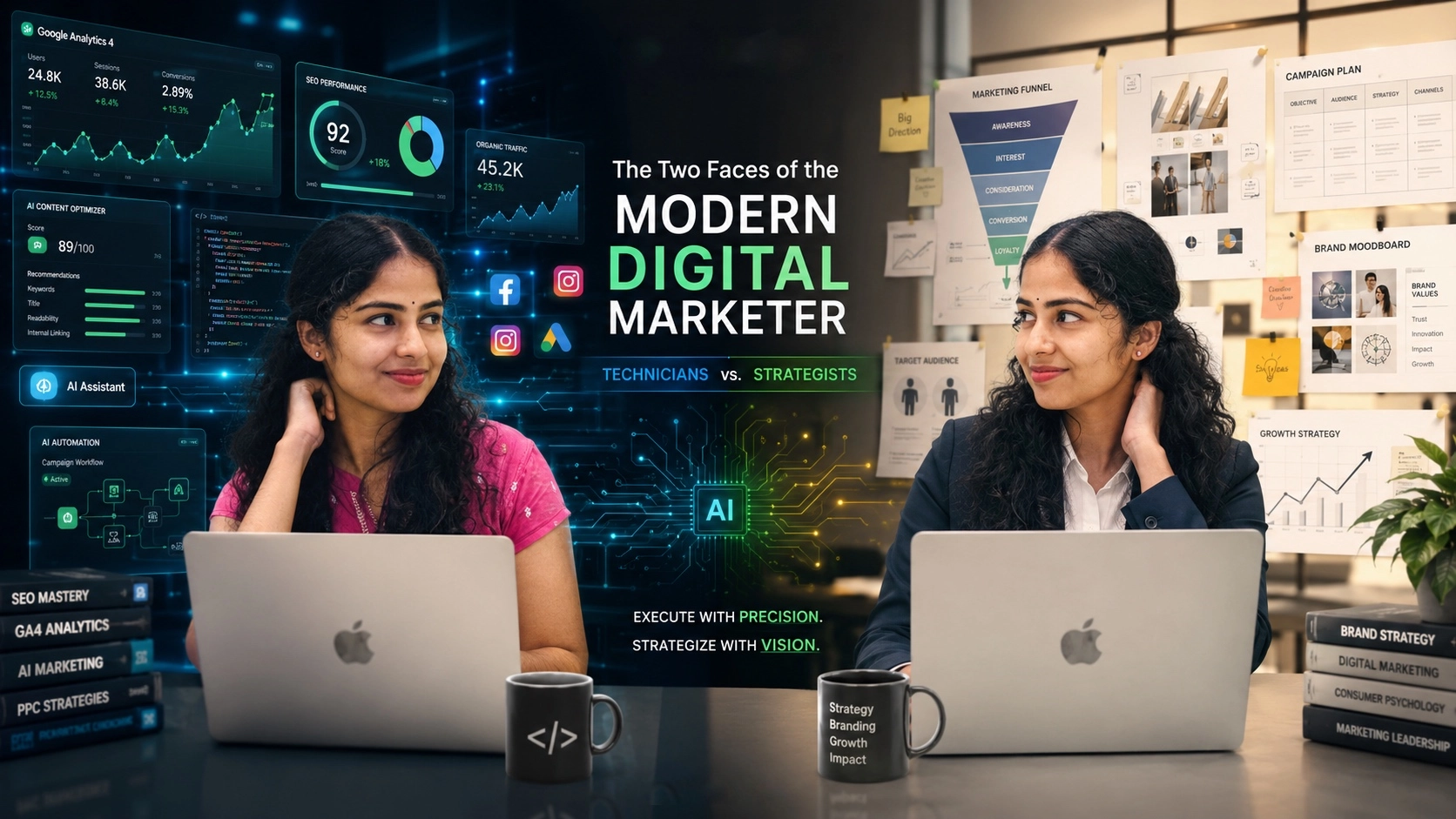
In today’s fast-paced digital world, marketing has evolved into a hybrid of creativity and technology. However, this evolution has also created a fascinating, and sometimes troubling divide within the industry. We often see two distinct types of digital marketers emerging, the Digital Technician and the Digital Strategist.
The Digital Technician is the tech-savvy executor of the marketing world. They can
Their toolbox is overflowing with platforms and plug-ins. They “know how to do” almost everything.
But here’s the catch: they often lack the why.
They might know how to run a campaign but struggle to define the reason behind it, the customer insight driving it, or the business outcome it targets. They are skilled at pressing the right buttons, but not always at setting the right direction.
On the other side of the spectrum stands the Digital Marketing Strategist, the planner, the thinker, and often, the storyteller.
Strategists don’t start with platforms. They start with purpose.
They ask:
Their strength lies in connecting business goals with customer psychology. They build campaigns that don’t just generate clicks, they create loyalty and conversation.
However, many strategists struggle to implement their vision technically. They might depend on technicians to bring ideas to life. When creative minds and tech executors don’t align, campaigns lose impact.
Recent studies on emerging marketers reveal three recurring themes:
This imbalance has produced a generation of capable executors but hesitant thinkers. They can run paid campaigns but fail to define brand narratives. They can measure engagement but not understand what drives it.
Digital marketing isn’t just about targeting pixels — it’s about understanding people.
Every click, view, and share is rooted in psychology.
Great marketers understand:
When a marketer learns to read human behavior, they stop chasing algorithms and start designing meaningful experiences. Technology becomes a tool, not the focus.
The future belongs to those who master both sides — strategy and technology. The Blended Digital Marketer is not defined by tools or titles, but by balance.
They:
For example: A blended marketer won’t just optimize ad CTR; they’ll analyze why customers clicked, what emotion the ad sparked, and how that insight can shape future campaigns.
The best digital marketer of the future won’t be just a technician or a strategist — but a thinker who can do, and a doer who can think.

WhatsApp us