
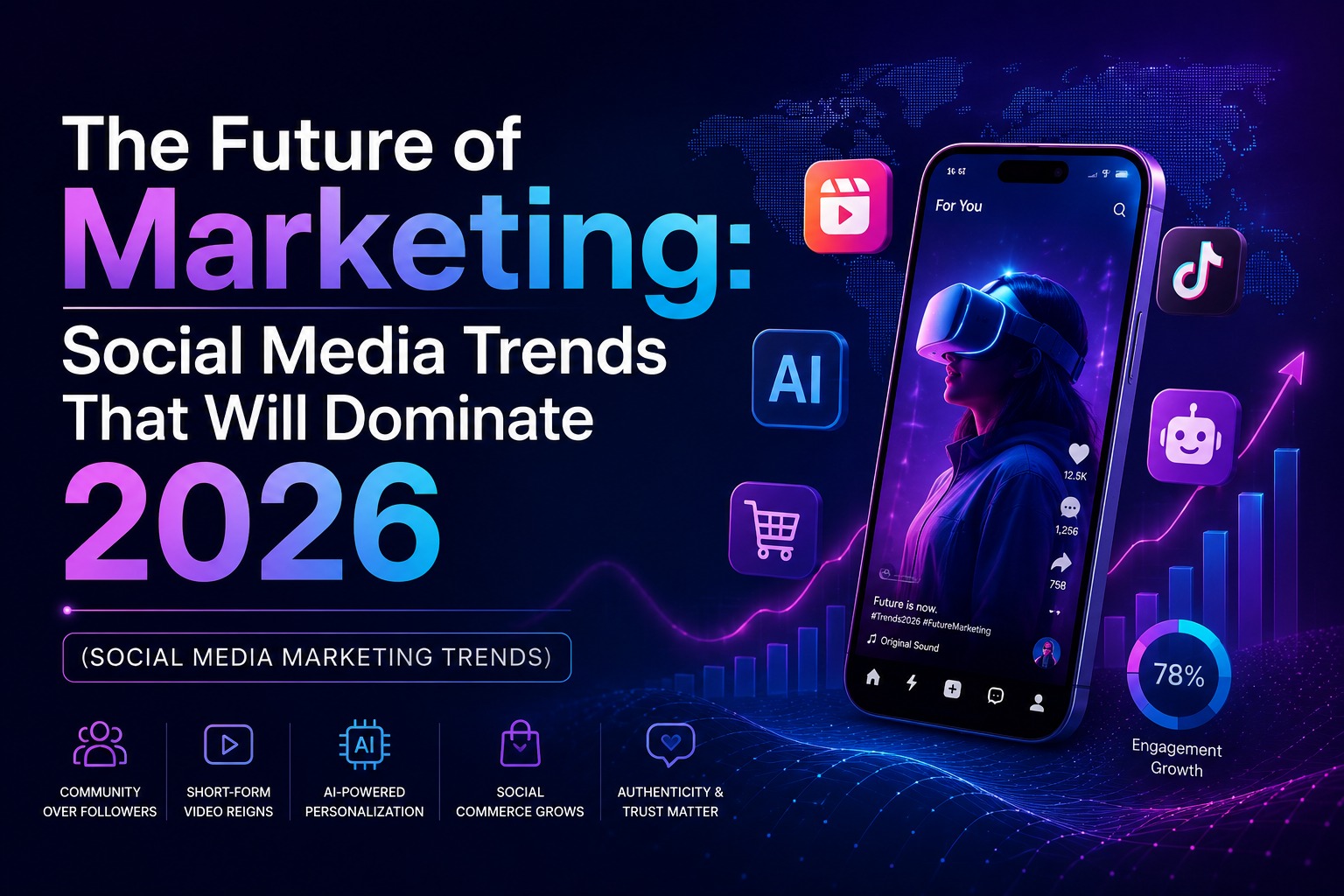
As the digital landscape continues to evolve at an unprecedented pace, social media remains at the forefront of marketing innovation. Looking ahead to 2026, it is clear that new trends and technologies will reshape how brands engage with audiences, build loyalty, and drive conversions. Businesses that stay ahead of these shifts will be better positioned to seize emerging opportunities and maintain a strong competitive edge.
This blog explores the most significant social media marketing trends expected to dominate marketing in 2026 and how brands can adapt to thrive in this changing environment. These social media marketing trends will define how businesses grow online in the coming years.
Artificial intelligence (AI) will play a major role in transforming social media marketing trends. In 2026, brands will use AI to deliver highly personalized content experiences based on user behavior and preferences.
Advanced machine learning models will help predict what customers want even before they search for it. This will allow marketers to create targeted ads, personalized feeds, and tailored messages that connect emotionally with users.
AI will also improve real-time engagement through smart chatbots and automated responses, becoming a core part of social media marketing trends.
Key uses of AI:
Impact: Higher engagement, better customer relationships, and improved marketing efficiency.
Short-form videos on platforms like TikTok, Instagram Reels, and YouTube Shorts will continue to dominate in 2026. These are key drivers of modern social media marketing trends.
Consumers prefer quick, engaging content that fits into their fast-paced lifestyles.
Key strategies for brands:
Impact: Faster reach, stronger engagement, and better brand visibility.
Augmented Reality (AR) is becoming one of the fastest-growing social media marketing trends. It is transforming how consumers interact with brands through immersive digital overlays integrated into social media platforms. As technology advances toward 2026, AR experiences are expected to become more sophisticated, seamless, and accessible across devices. This trend opens up new avenues for virtual try-ons, interactive advertisements, branded games, and experiential marketing campaigns that captivate users in real time. Brands leveraging AR can provide personalized shopping experiences from home—allowing customers to virtually test products before purchasing—thus reducing hesitation and boosting conversions.
Embracing AR’s potential allows brands not only to stand out but also forge memorable interactions that resonate long after the initial engagement. .
Social commerce—the buying and selling of products directly through social media platforms—is rapidly gaining momentum—and by 2026 it will be fully integrated into daily consumer habits. Platforms like Instagram Shopping, Facebook Shops, TikTok Shopping, and Pinterest are evolving into comprehensive marketplaces where users can discover products seamlessly without leaving their favorite apps. This integration simplifies the purchase process by reducing friction points such as redirects or complicated checkout procedures. Additionally, live shopping events—where influencers demonstrate products in real-time—are becoming standard practice for driving immediate sales conversions.
With consumers increasingly comfortable making purchases within social environments—and expecting instant gratification—adopting social commerce strategies is no longer optional but essential for future success.
Influencer marketing continues to evolve within social media marketing trends, shifting toward micro-creators-individuals who command niche communities with high engagement levels. By 2026, this trend will intensify as brands recognize the authenticity and trust micro-influencers bring compared to traditional celebrities. These creators often have highly specialized audiences interested in specific topics or products; thus partnering with them results in more genuine recommendations that resonate deeply with followers. Additionally, as influencer marketing technology improves—with better analytics tools—brands can measure ROI more accurately than ever before. Micro-creators also tend to produce more relatable content at lower costs while maintaining high levels of authenticity—a combination highly valued by modern consumers seeking transparency from brands.
The rise of micro-creators signifies a shift toward more honest brand advocacy rooted in community trust—a vital component of successful marketing strategies moving forward.
Data privacy is becoming one of the most important social media marketing trends for 2026.
As social media platforms face increasing scrutiny over data privacy concerns, ethical marketing practices are becoming central themes shaping consumer trust by 2026. Users are now more aware of how their data is collected and used; therefore transparent communication about privacy policies will be essential for maintaining credibility. Brands adopting ethical standards—such as obtaining explicit consent before targeting users or avoiding manipulative tactics—will enjoy stronger loyalty from conscious consumers who value integrity over gimmicks. Moreover, regulatory frameworks around data protection are expected to tighten globally; companies must stay compliant while balancing personalized marketing efforts effectively. Authenticity paired with respect for user privacy fosters long-term relationships that benefit both parties equally.
Prioritizing ethics not only mitigates legal risks but also positions brands as responsible entities committed to safeguarding consumer interests—a crucial advantage in future marketing landscapes.
Emerging platforms are redefining social media marketing trends 2026.
While Instagram, TikTok, and Facebook remain important, new technologies are reshaping the future.
Future innovations may include:
What brands should do:
Impact: Early adopters will gain a strong competitive advantage.
The future of social media marketing in 2026 will be shaped by rapid technological innovation and changing consumer expectations. These social media marketing trends will influence every aspect of digital strategy.
The most important trends include:
Brands that adapt quickly, stay flexible, and embrace innovation will not only survive but thrive in this evolving digital landscape.

WhatsApp us